Since me and my group member are starting our final project which consists of the horror genre, me and my partner decided to organize a study of several famous horror films. Through our study, we complied useful all the useful information and listed each component in the following paragraphs.
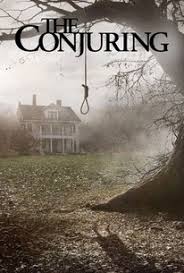
The Conjuring
“The Conjuring” is one of the films that me and my group member decided to seek reference from. Being primarily a suspenseful horror film produced in recent times, a lot of modern horror techniques were used to develop its unique atmosphere. Whether it be the usage of sweeping shots, or the absence of sound within a particular scene, this film defines the modern horror film. Through the usage of sweeping cameras, we are given an unnatural and disconnected perspective of what is occurring in a particular scene. It disconnects the audience from the characters, forcing the viewers to see the whole situation in the perspective of an unknown entity. The lack of sound in certain scenes is also exemplary of a newer horror trend where silence is a lot more prevalent. This film utilizes silence and diegetic effects to emphasize that the house is completely empty, which is contradicted by the unnatural presence of the demon, that is shown utilizing diegetic sounds. This film inspired us to utilize more diegetic sound effects to immerse the audience into the scene, and to utilize sweeping cameras to present an unnatural scene.
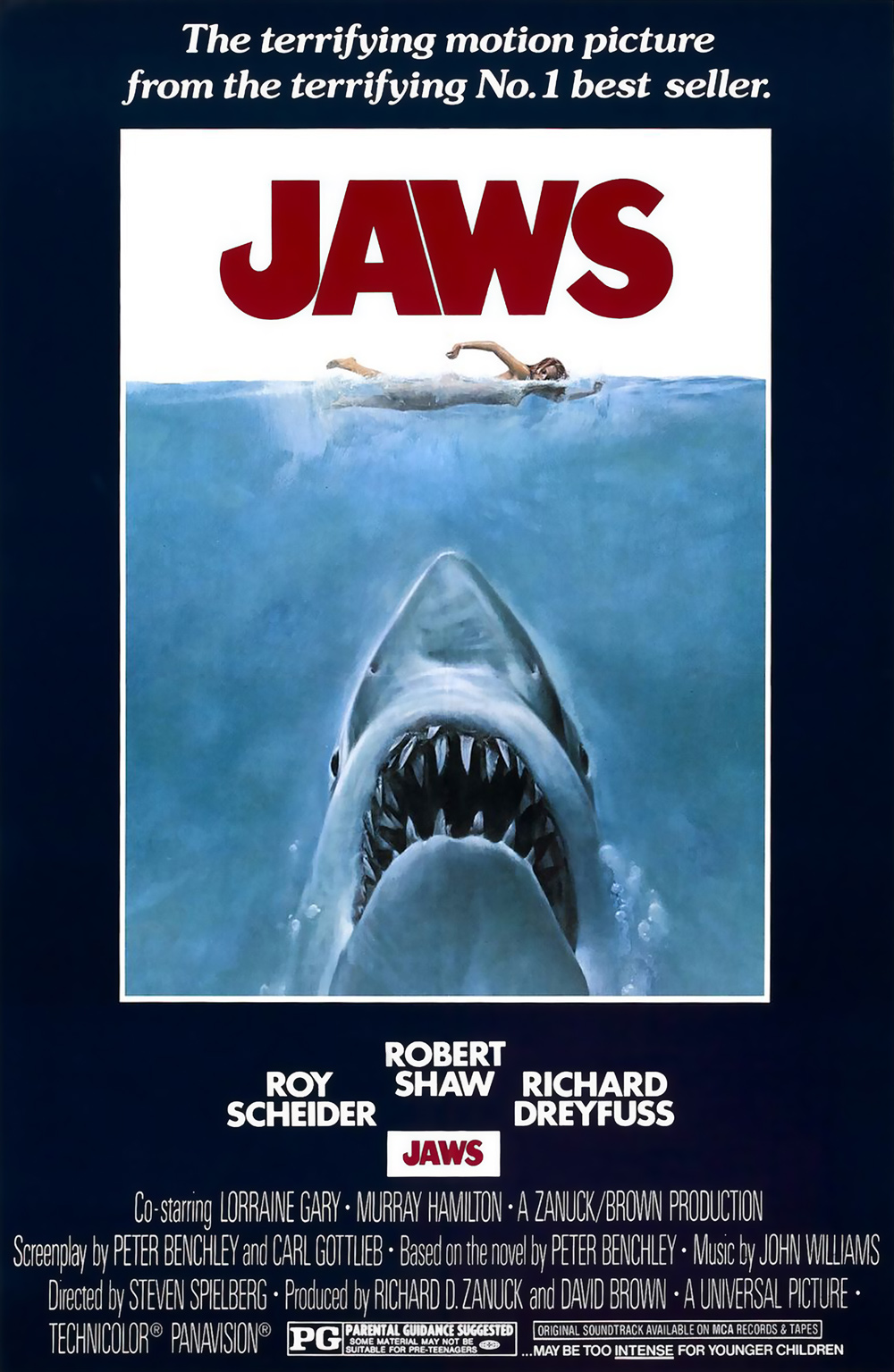
Jaws
When analyzing Jaws we looked closely at how the shark was portrayed in the film. In the original cut of the film, we noticed that the shark was never really present in the film. The threat being entirely unseen makes this film a lot more intense as the threat itself is left for the audience to visualize rather than it being openly shown. This makes the audience fear the shark a lot more since there is a natural fear of the unknown present within the mind of the viewer. With this viewing, we decided to integrate this technique in our production to generate more suspense for our film.
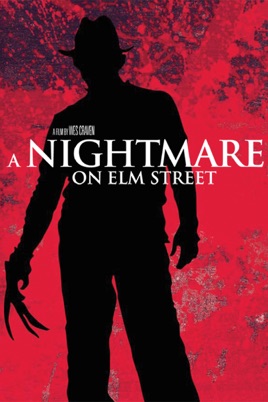
The Nightmare On Elm Street
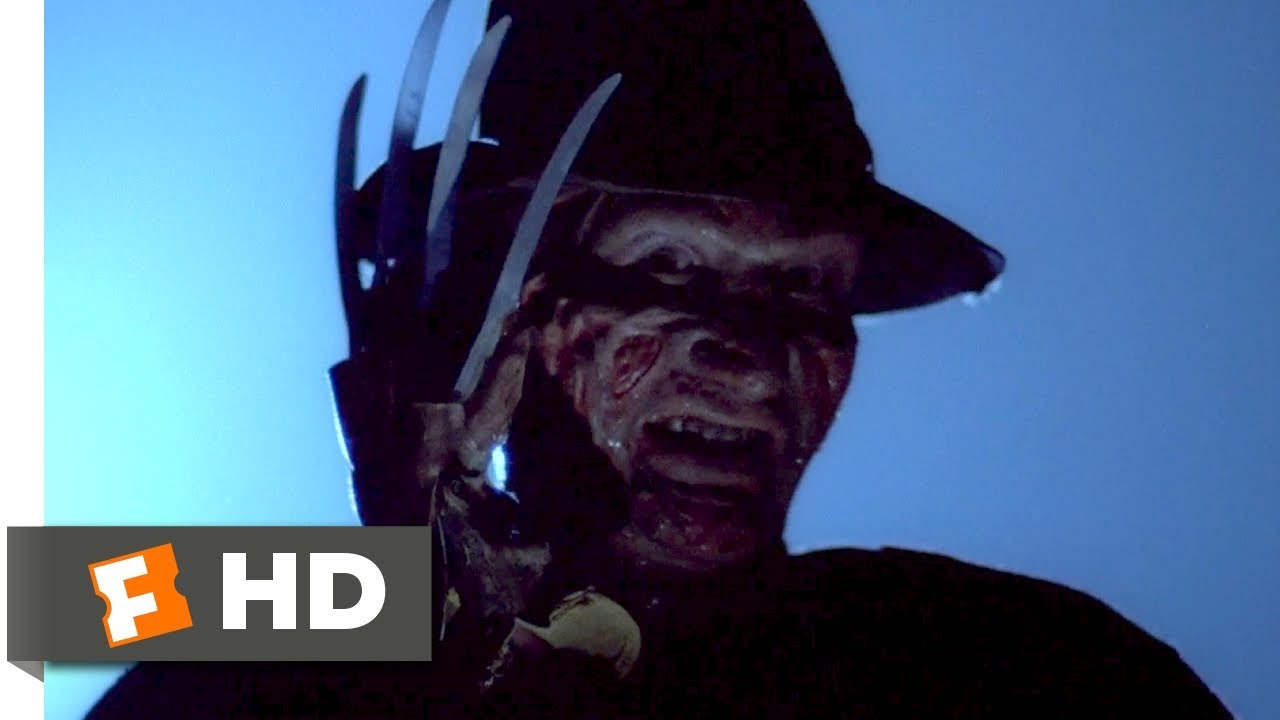
After seeing this film it gave me so many ideas of how to make that happen. I also like the plot of how if you have a dream of Freddy killing you it happens as well in real life. The soundtrack in this film is also very good because it also tries to keep the audience on edge while it shows the different scenes such as Freddy’s shadow showing on the wall slowly creeping into the house. I also like the scene in which it shows Freddy walking down a dark alleyway, with the suspenseful music and it shows his sharp claws.This film attracted my attention because it as well had some things that me and my partner want to use in our film. This film is considered a cold classic in horror because of how well it was made and how intense and scary it was for the audience throughout the film. I also liked how many times throughout the movie there is many scenes which are shot using silhouette lighting and as well many scenes where his shadows are projected on the walls while he’s walking down alley ways or around in a house. I like this because in my final project I want to have a lot of shots which are dark colors, the setting has a mood of terror and darkness as well.
Im am creating this post to illustrate the components that go into the genre of horror that me and my partner are doing. Through my AS Media Studies class, I learned how these components are fundamental to the creation of a horror film. This is why I would like to project this information to you, so you all know the basics behind the horror genre.
The Key Elements of Horror
1.Dismemberment: Fear of dismemberment involves loss or dislodgment of a body part from a particular person or being. The recognition (and horror) of the Saw movies involves self-dismemberment because the only way to escape death through severe physical torture.
2.Lightning and Thunder: many of us are scared of lightning and thunder — sudden flashes of sunshine , which will kill, and a sudden and deafening sound that accompanies the lightening. Flashing lights and loud noises create a startle reaction and that they are a mainstay of the horror film.
3.Suspense (anticipation and expectations): The best horror movies are filled with suspense (think Alfred Hitchcock). Suspense involves creating anticipation that something bad will happen, but not knowing when it’ll occur. a number of the foremost shocking horror movie scenes, create anticipation, on the other hand violate the audiences’ expectations (e.g., the hero gets killed; the killer is that the one the audience least expects, etc.).
4.Scary setting/places: Horror movies are filled with scary places – graveyards, old houses, overgrown forests, dungeons, attics, basements. These are dark places, where evil things can hide.
5. The dark: From our earliest childhood years, we’ve been scared of the dark — not the dark itself, but what it hides. It makes horror movies even scarier to observe them during a darkened theater, or a dark front room , right?
6. Fear of death: This is often the last word fear, both existentially and psychologically. It isn’t really a horror movie if people don’t get killed.
7. Creepy crawling animals: Snakes, spiders, rats, and other crawling things are scary in and of themselves, but once they touch the skin, within the dark, it amplifies this common phobia.
8. Disfigurement: Many horror movies feature grotesquely disfigured antagonists (think Frankenstein’s monster, the Phantom of the Opera, zombies). Studies in early development have found that young infants will react with fear to asymmetrical or disordered faces.
9. Scary/Suspenseful music: Music can create moods and elicit emotions. The music utilized in horror movies are often creepy, and may be wont to accentuate the actions seen on the screen. Music intensifies feelings of suspense and shock.
10. Fear of the unusual: We know that young children are often scared of things that are different or unusual (such as a disfigured face), and highly unusual-looking things are often sources of fear. But a standard theme in horror movies is to require something that’s normally not scary (e.g., a doll, a child, a clown) and make it into a feared object. In other words, making the standard , unusual. this might explain the growing number of individuals who confess to a fear of clowns and dolls.
Other Common Characteristics in Horror
The Element of Surprise:While having prior knowledge is usually good going into a horror film, it’s nice to ascertain the unexpected inherit play so as to form things a touch harder . the principles are meant to be guidelines, but when they’re broken or bent, all kinds of crazy things could happen, which keeps the story fresh. within the case of SCARY STORIES to inform within the DARK, the newly created monster referred to as “the Jangly Man” may be a mixture of several of the books’ monsters became one creepy surprise for loyal fans to enjoy.
Atmosphere: Dim lighting, wide corridors and fluttering curtains can do tons for a possible scary adventure. Even something as innocuous as creaking floorboards are often threatening, if presented within the right context.
A Backstory That’s Key to the Monster/Villain’s Purpose: There is nearly always a backstory to the monster or villain of a bit , and it’s a reasonably important thing to possess on your side when telling a scary story. an honest origin story makes the progression of evil interesting and helps the protagonists understand the way to defeat the monster/villain.
Proper Music: A good horror movie needs an equally horrific score that signifies when danger is around. Screams sound better when they’re in tune with a villain’s arrival song. The more memorable the music is, the creepier it can become when folks happen to listen to it randomly on a dark and dreary night.
An Ultimate Showdown : A good horror movie needs an equally horrific score that signifies when danger is around. Screams sound better when they’re in tune with a villain’s arrival song. The more memorable the music is, the creepier it can become when folks happen to hear it randomly on a dark and dreary night.
Clear Rules to Live By: Anyone during a horror movie knows that there must be a group of rules. Whether the story adheres to them or gleefully twists them into something to trap our heroes, these guidelines tell us when to scream and when to sigh with relief. Though it seems a touch late for the SCARY STORIES team, as by finding the film’s book of spooky stories, they’ve already awoken a reasonably powerful evil.
A Memorable Menace: If you’re going to get scared by a horror movie, it should be a minimum of a threat that’s truly terrifying. Be it a sensible horror villain like Norman Bates or something like SCARY STORIES to inform within the DARK’s cadre of beasties, if they will inspire horror just by watching them or mentioning their name, the story is off to an honest start.
Obscuring through lighting: Unlike the other techniques, spotlighting, underexposing, hard light, and shooting through objects and elements don’t distort or hide subjects in your image, they obscure or conceal them
Distorting through lighting: Now, uplighting, silhouette, and prominent shadows take it a step further and produce a complete distortion of the real world.
Prominent and projected shadows: – the use of projected shadow creeping along a surface creates tension and fear. While you do not see the figure directly, the distorted figure creates a sense of fear in the audience
Shooting through objects (internal frames): quite literally, to have a small object between the front of the lens and your subject. This is often used to frame the subject, in order to draw attention to it/them, soften the edges of the image, or add a cool color special effect, to an otherwise ordinary image.
Shooting through elements: These shots are done to not have the full focus of the shot on a character but instead to include objects as well so there are other things to think about
Underexposure: If too little light is recorded when capturing an image the image is said to be ‘underexposed‘; The imaging medium i.e. film, or sensor has not been exposed to light for long enough to capture a sufficiently bright image.
Harsh light (hard light, chiaroscuro): very bright, directional light, typically found during mid-day. It casts strong shadows with very defined lines onto your subjects.
Uplighting: a popular lighting effect created by strategically placing lighting fixtures on the floor and pointing them up
Silhouette: effect is created when a light source is placed behind your subject, with little to no light in front of your subject
Spotlighting: a method of hunting nocturnal animals using off-road vehicles and high-powered lights, spotlights, lamps or flashlights, that makes special use of the eyeshine revealed by many animal species.
Examples of Lighting in Movies
The movie “Us” exemplifies underexposure during the hall of mirrors scene.
On “Nightmare on Elm street” we see Freddy being illuminated from the side
In Alfred Hitchcocks “Psycho” the film distorts the lighting through the use of a silhouette.
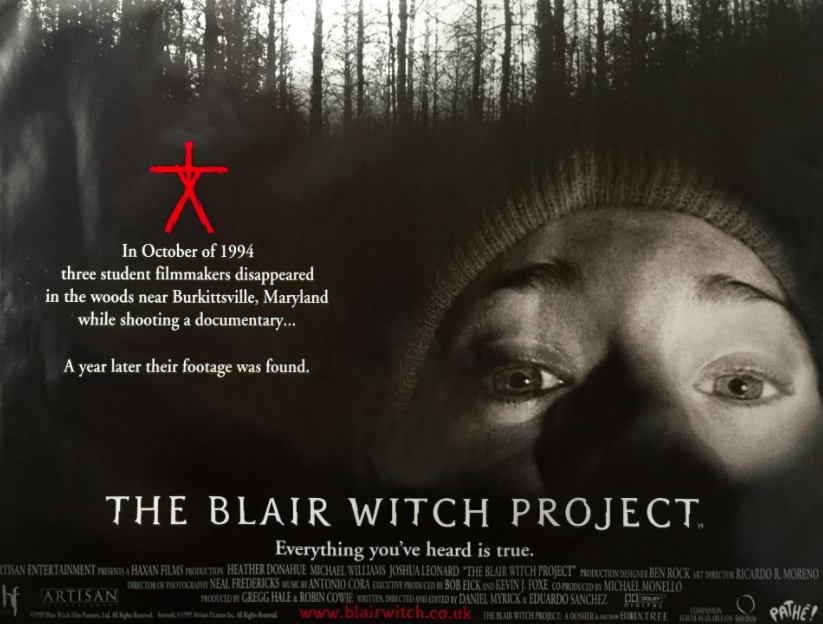
I am analyzing this film because it is an excellently shot horror film that used to frighten me as a kid. The film itself is revolutionary, single handedly instigating the “found footage” horror style that we see in movies such as “Creep” and “They’re Watching” to list a few. Directors Eduardo Sánchez and Daniel Myrick managed to compile a film that not only possessed the audience with mystery and suspense, but managed to scare viewers after the credits have rolled. It takes a significantly terrifying film to perform such a feat, so I thought a deeper look into the inner workings of this film would be extremely insightful.
Plot of the film
Heather Donahue, Michael Williams and Joshua Leonard, student filmmakers, set out to shoot a documentary about a local legend, the Blair Witch. In the forests near Burkittsville, Maryland, many children have vanished in the 1940s and people still avoid going too deep into the woods. So, the party sets out to look for facts that prove the legend, equipped only with two cameras and a little hiking gear. First, they find little piles of stone that must have been arranged artificially, later, they have to admit to be lost in the woods. Eerie sounds at night and more piles of stones in places where they have not been before cause the already desperate group to panic. And one night, days after they should have been back home, Josh disappears completely. Only what has been recorded and filmed with the cameras is found a year later and shows what happened in the woods.
Meaning behind the film
The film likes to accentuate the mysterious nature of this supernatural predicament. Being that they chose to disregard local legends to explore an ominous woods for their little documentary. Clearly this is a recipe for disaster. However, theres more to this than initially seen. The idea that these people plan to expose the horrors that plague the local town emphasizes an idea of cultural intolerance. In the real world, where this sort of thing would never happen, this situation would lead to the rapid disbelief of such a local legend. Though their intentions are noble, this would negatively effect the town as the townsfolk would be discredited and exposed, leading to severe humiliation. This could be viewed as a form of cultural intolerance, where in the film, by dismissing local legends, these characters are exposed to the worst that this fabled legend has to offer. Ultimately paying for their intolerance with their lives. By mystifying the entity, the work enables the entity to posses more meaning than just a spooky phenomenon. This whole feature is a study of what happens when people disregard, nature, and native culture, for ones personal intentions. The witch being the bringer of justice for those who expose local culture.
Horror Techniques utilized
1.Lighting
2.Sound design
3. Anticipation of fear
4. Handheld Cinematography
Themes
1.Insecurity: None of these characters in the film feel secure when inside the forest. Their sense of direction being completely thrown off course, their purpose changes from exposing the phenomenon, to escaping it alive. Their entire experience within the forest is terrifying, being exposed to all kinds of supernatural occurrences that not only disorient, but mentally degrade the characters until they’re nothing more than victims of complete despair. Their fear being the lead source for their failure to escape, leading them further and further into the mysterious forest that leads to their ultimate demise.
2. Mental instability: The characters in the film slowly go insane as the events that transpire through the film suggest an obvious evil within the forest. Their beliefs of safety are completely suspended as hints of danger and death haunt each character to their very core.
3. Death: Death is a commonly reoccurring theme throughout the film. Even before all the havoc is unleashed, we are told that there have been several other instances of death inside the woods. All the deaths were mysteriously unexplained. When the havoc begins, we see even more death present all the way up till the end where even the protagonists face an untimely death.
1.The Master directed by Paul Thomas Anderson: The haunting, utterly inward stillness of the actors in “The Master” is one of the director Paul Thomas Anderson’s most apparent achievements, and it’s no mere ornament or element of dramatic plausibility—it’s at the core of the film, as is the very question of performance as such. I’ve seen the movie twice, which proved important. The first time, I found myself wondering about what it isn’t; the second, I was all the more struck by what it is. It’s not a work of psychological realism but one of extravagantly stirring symbolism masquerading as naturalism, and the first symbols that it sets in motion are the actors themselves.
2.A Very Long Engagement by director Jean-Pierre Jeunet: In the horror of trench warfare during World War I, with French and Germans dug in across from each during endless muddy, cold, wet, bloody months, not a few put their rifles into their mouths and sent themselves on permanent leave. Others, more optimistic, wounded themselves to get a pass to a field hospital, but if this treachery was suspected, the sentence was death. “A Very Long Engagement” opens by introducing us to five French soldiers convicted of wounding themselves; one is innocent, but all are condemned, and it is a form of cruelty, perhaps, that instead of being lined up and shot they are sent out into No Man’s Land and certain death.
3.Elephant by director Gus Van Sant: Elephant is a record of a day at a high school like Columbine, on the day of a massacre much like the one that left 13 dead. It simply looks at the day as it unfolds, and that is a brave and radical act; it refuses to supply reasons and assign cures, so that we can close the case and move on. Many viewers will leave this film as unsatisfied and angry as Variety’s Todd McCarthy, who wrote after it won the Golden Palm at Cannes 2003 that it was “pointless at best and irresponsible at worst.” I think its responsibility comes precisely in its refusal to provide a point.”
4.Somewhere by director Sofia Coppola: Don’t distinguish what he feels with the word existential. It has nothing to do with philosophy. This is called depression, but it may simply be a realistic view of the situation. Johnny Marco sits in a suite of the Chateau Marmont, that little hotel for generations of Hollywood hideouts, and finds himself a hollow man. With that comes such options as money, fame, sex, drugs. Fame is a joke because he gets nothing from it. Sex involves mechanical manipulations of the genitals.
5.Milk by director Gus Van Sant: Few characters could be more different, few characters could seem more real. He creates a character with infinite attention to detail, and from the heart out. Here he creates a character who may seem like an odd bird to mainstream America and makes him completely identifiable. Other than the occasional employment of Harvey Milk’s genitals, what makes this character different? Some people may argue there is a gay soul but in reality we all share the same souls.
6.On The Road by director Walter Salles: Although Jack Kerouac’s “On the Road” has been praised as a milestone in American literature, this film version brings into question how much of a story it really offers. Kerouac’s hero, Sal Paradise, becomes transfixed by the rambling outlaw vision of a charismatic car thief, Dean Moriarity, and joins him in a series of journeys from his mother’s apartment in Ozone Park, N.Y., as they crisscross the continent to Chicago, Denver, San Francisco and then back again, until it occurs to Dean “I’ve never been south.” They turn to Mexico, finding in its long, straight cactus-lined roads, some secret to themselves. They also find marijuana; the two may not be unrelated.
Why these movies were chosen
These movies were chosen because they are significant films that study the relationship between a metaphysical opposition and a characters emotional state. Whether it is through a relationship, or the journey that our protagonists go through, all the movies listed go in-depth regarding different character types interacting with one another. This creates a very interesting character study between all the different variations in character types. We see how different genders interact with one another and how their actions effect the progression of the film. For example, in the film Milk, the two homosexual protagonists move to San Francisco and change the local Chavez district. This is an example of a unique character interaction that changes or challenges the ideas established by the rest of society. This expresses a sense of change throughout all these works that make them influential and important as messages of change.
I watched this film because it is a significant film within the genre of horror that made many revolutionary innovations within the genre that are now taken for granted. This Alfred Hitchcock film is a suspenseful film that has influenced countless other films in the genre and has been named one of Hitchcock’s legendary films. As with any of Hitchcock’s films, it is not only just about the outdated innovative effects, but the atmosphere, cinematography and story that defines this film as a horror master piece.
Facts about the film
One fact regarding the production of the film include the fact that Alfred Hitchcock kept Janet Leigh on edge throughout filming. He did this by hiding the different versions of the ‘Mother’ dummy in her dressing room closet. Another production fact includes the famous shower scene which featured 77 different camera angles and 50 cuts. It took them seven days to shoot the 3 minute scene. Another fact is that Psycho almost didn’t happen. Hitchcock was planning a film called No Bail For The Judge with Audrey Hepburn, but that fell through so he proceeded with Psycho. Paramount was so against the idea of Hitchcock making Psycho that it only agreed to distribute the film when Hitchcock offered to finance the production himself and forgo his $250,000 fee. Cannily, he took a 60% stake in the film’s box office. Ultimately, Psycho earned over $15 million on its initial release, making it Hitchcock’s biggest hit by some distance. Definitely his lucky break considering the circumstances.
What the movie was about
Phoenix-based Marion Crane, who has for ten years worked as an assistant to real estate agent George Lowery, laments the fact she and her divorced boyfriend, Sam Loomis, can’t get married due to money issues, he a penniless hardware store clerk whose debt is a result of having to pay alimony. Marion senses an opportunity when one of Lowery’s wealthy clients pays his account with forty thousand dollars cash, Marion is tasked with taking the money to the bank. Being a Friday afternoon, Marion believes she can slip out of town immediately undetected with the money to join Sam in Fairvale, California where he lives, before Lowery would even suspect that she has absconded with the money the earliest by Monday. The isolated motel has had little business ever since the state highway was moved. The motel is run by friendly, but lonely Norman Bates, who lives with with his invalid mother in the big, old house on the hill overlooking the motel. Although she doesn’t meet Mrs. Bates, Marion knows that she is an angry, controlling woman based on an argument she overhears between her and Norman. That evening, Marion has a change of heart and contemplates returning to Phoenix to return the money. But she never makes it either to Phoenix or Fairvale. As such, several people come looking for her, including Sam, who is suspected of being in cahoots with Marion in stealing the money, Marion’s worried sister Lila Crane, who is able to convince Lowery not to press charges if Marion returns the money, and a private investigator named Arbogast who was hired by Lowery.
Marion Crane
In the film Marion lives in Phoenix, Arizona as a secretary and is unhappy in her relationship with Sam Loomis , a divorcé who is in too much debt to marry her. Marion rejects his idea to take the afternoon off and rushes back to her storefront real estate office. Her boss of ten years, George Lowery , arrives shortly afterward with Tom Cassidy , a wealthy customer who is buying the Harris Street Property, one of Lowery’s houses on the market for $40,000 as a wedding present for his daughter, making cash payment in full, which causes mild alarm to Lowery. After wrapping the remaining money inside a newspaper, Marion overhears a heated argument between Norman and his mother about letting Marion into the house. During dinner, Marion has a conversation with Norman, who says that he is trapped by his obligation to his mentally ill mother. She realizes that she, too, is stuck in a «private trap», and can only escape it by taking responsibility for stealing the money. She then takes a shower. Suddenly, a mysterious figure enters the bathroom — shadowy through the shower curtain — and stabs Marion to death. Believing his mother has committed the murder, Norman puts the naked corpse and shower curtain — and, unknowingly, the money — in the trunk of Marion’s car and sinks it in a nearby swamp. The climax of the novel and film reveals that Norman murdered Marion while under the control of an alternate personality—one taking the form of his mother, whom he had murdered ten years before. The psychiatrist who examines Norman explains that, when Norman felt attracted to Marion, the “Mother” personality became jealous and killed her. In the final scene, Norman — now completely controlled by the “Mother” personality — is institutionalized for killing Marion.
Norman Bates
Norman (Who is the plot’s main antagonist) suffered from severe emotional abuse as a child at the hands of his mother, Norma, who preached to him that sexual intercourse was sinful and that all women were whores. The novel also suggests that their relationship may have been incestuous. Driven over the edge with jealousy, Norman murdered both of them with strychnine. After committing the murders, Norman staged it like murder–suicide, making it look as if Norma had killed her fiancé and then herself. After a brief hospitalization for shock, he developed dissociative identity disorder, assuming his mother’s personality to repress his awareness of her death and to escape the guilt of murdering her. He inherited his mother’s house—where he kept her corpse in the fruit cellar—and the family motel in the small town of Fairvale, California. “Norma” dominates and belittles «Norman» much as she had when she was alive, forbidding him to have a life outside of her and flying into violent rages whenever he feels attracted to a woman.
Plot Themes
Criminality: The two criminals are both guilty of their crimes. Marion who merely stole money, and Norman who is a mass murderer. Though their crimes are not equal in gravity, the two are linked to one another. She is eventually killed by Norman, which promotes the theme of equal criminality. Doesn’t matter what crime it is, if you are on the criminal spectrum, justice will reap vengeance.
2. Insanity: Psycho focuses on the insanity involving gender confusion. The lunatic Norman Bates is angry with his sexual desires, his love of being a mother, and his immense jealousy have gotten him immensely confused. It gets to the point where he is incapable of determining whether he is a mother himself or whether he is a confused Mamas boy. Since his current state doesn’t categorize him as a normal guy, he goes crazy and crossdresses as a mother who kills. This reveals deeper prejudices with gender within
3. Sex: Both main characters within the film are avoiding sex for some particular reason. For Norman, he avoids sex because he is scared of it, which leads him to kill someone. Marion is also terrified of sex, she is so terrified that she steals money and runs off just to avoid it. Thus, the themes for sex in this film are connoted with guilt, danger, and the evil.
4. Family: Within the film, the idea of family is directly brought up with Norman’s mother. As famous neurologist Sigmund Freud once theorized that children are attracted to their mothers and will later relocate that love to a woman. For Norman however, this is not the case. he loved his clinging mom too much, killed her in a jealous rage at her new boyfriend, and now whenever he tries to switch his affections, he ends up killing the woman in question. Mommy issues: they’ll mess you up every time.
Conclusion of the film
In the Bates Motel office, Sam insinuates that Norman would try to unload the Bates Motel if he had the chance, to which Norman responds, “this place happens to be my only world.” He claims to have had a very happy childhood. Inside the Bates home, Lila walks around Norman’s childhood room, in which the small single bed looks as though it had recently been slept in. Suddenly, Norman realizes that Lila has gone into the house and panics. He knocks Sam over the head with a vase and runs outside. Lila sees him coming and hides. Norman enters the Bates house and rushes upstairs, thus giving Lila the chance to continue downstairs into the cellar. Lila approaches her slowly, saying, “Mrs. Bates”. She touches the old woman’s shoulder and turns her around – revealing that it is only a skeleton in a wig and a dress. Lila screams and just then, Norman charges into the cellar wearing a grey wig and one of his mother’s dresses, with his knife in his hand and a maniacal grin on his face. Before he can attack Lila, however, Sam wrestles Norman to the ground and disarms him. The scene ends with a closeup of Mrs. Bates’s shriveled skull.
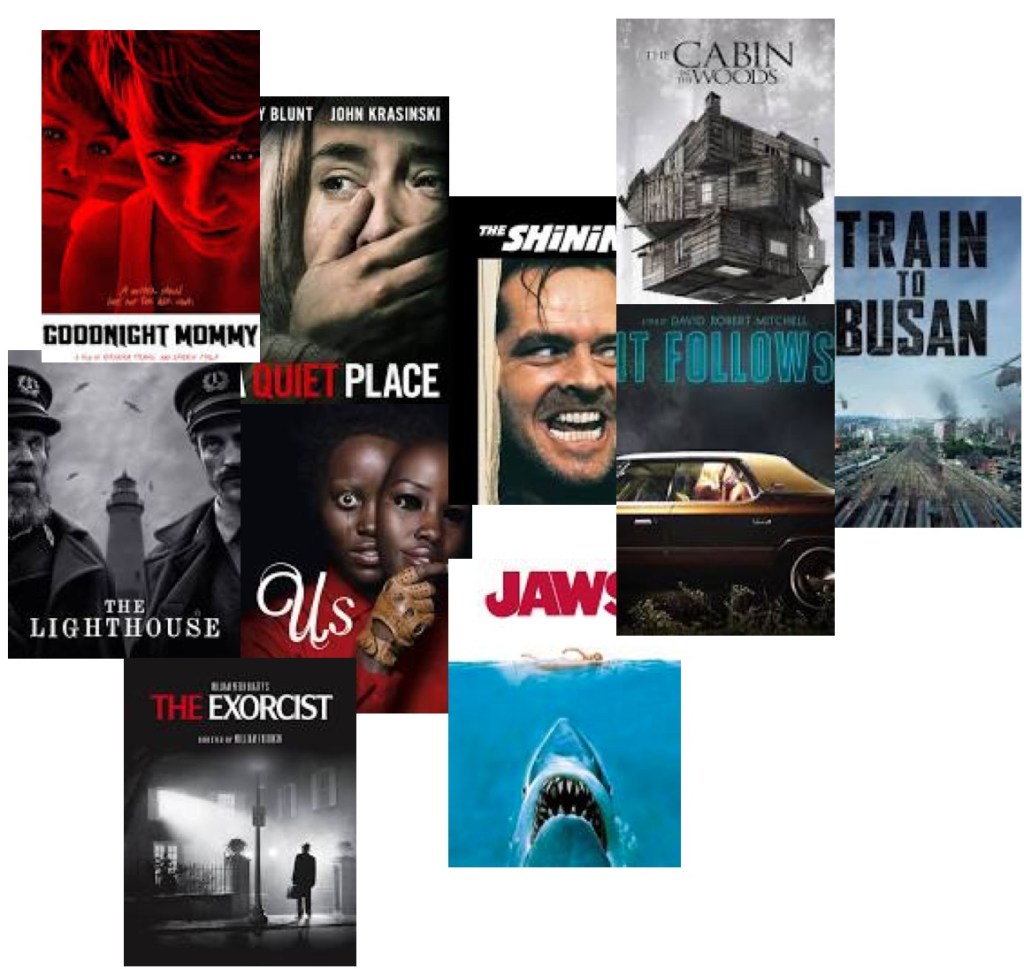
The movies listed in my Mood Board belong to the horror genre of film, where the objective is to frighten and thrill the audiences. The films listed in my mood board are all legendary horror films that define the term horror completely. Whether it be a rampaging murderer, a deadly shark, a supernatural phenomenon, or a horrifying disaster, these films tell a shocking and suspenseful story throughout. Through the utilization of horror techniques such as jump scares, dark lighting, suspenseful music, and angled cinematography, these films are capable of imbuing a sense of danger and fear into the audience.
Movies within the mood board are:
1.Goodnight Mommy: Stories where the monster and the victim are family make up a good chunk of the horror canon: The Shining, The Omen, The Exorcist, Rosemary’s Baby, A Tale of Two Sisters. And so despite the crowded cinematic field, the family at the center of Goodnight Mommy is, if nothing else, unhappy in its own way—a way that involves inhumanly large insects, a formaldehyde-soaked cat, and an inexplicably large pile of bones buried beneath the house. But something seems off about her to the boys—she’s more distant, she’s forgetful, she’s sleeping a lot, not to mention she cuts a terrifying figure with her bony frame and a head swathed in bandages. The three move like leashed animals throughout the house, tiptoeing around each other as the boys try to unmask her, both literally and figuratively.
2. The Lighthouse: Waves crash, birds scream, and rain pounds. Robert Eggers’ “The Lighthouse” wants to drive you a little mad. It’s not just a film about two people on the edge of sanity, it uses sound design and filmmaking tools to push you there too. While it’s ultimately a bit too self-conscious to provoke the existential dread and true terror of the best films like it, it’s still an impressive accomplishment thanks to Eggers fearlessness and a pair of completely committed performances.
3. The Exorcist: “The Exorcist” may not be a great film. It is, however, a brilliantly successful horror movie. It does not matter if you have read William Peter Blatty’s original novel and know what to expect. One still recoils from those scenes in total shock and revulsion. It is quite another thing to see it; to see the furniture fly across a frigid room, to see the ugly sores erupt on the victim’s face, to see the eyes turn fiendish with hate, and to see a snarling beast assert itself in the body of a child.
4. A Quiet Place: John Krasinski’s “A Quiet Place”, is a nerve-shredder. It’s a movie designed to make you an active participant in a game of tension, not just a passive observer in an unfolding horror. Most of the great horror movies are so because we become actively invested in the fate of the characters and involved in the cinematic exercise playing out before us. In other words, it’s a really good horror movie.
5: Us: The movie’s imaginative spectrum is enormous, four-dimensionally so: it delves deep into a literal underground world that lends the hallucinatory concept of the “sunken place” from Jordan Peele’s other film, “Get Out” a physical embodiment. “Us” is nothing short of a colossal achievement.
6: The Shining: Stanley Kubrick’s The Shining is another chance to savour, first of all, those magnificent interior sets. Instead of the cramped darkness and panicky quick editing of the standard-issue scary movie, Kubrick gives us the eerie, colossal, brilliantly lit spaces of the Overlook Hotel , shot with amplitude and calm. And this is before he sees the strange little girls. Jack Nicholson and Shelley Duvall play Danny’s parents, Jack and Wendy, who have the live-in job of caretaking a gigantic resort hotel while it is closed for the winter. Nicholson’s performance as the abusive father who is tipped over the edge is a thrillingly scabrous, black-comic turn, and the final shot of his face in daylight is a masterstroke.
7: Jaws: In addition to scaring the living daylights out of millions of movie-goers and putting a cramp in the revenue stream of nearly every North American beach resort, two significant developments can be attributed to Jaws. Jaws was the first summer mega-hit, but, because Hollywood learns from its success stories, it has not been the last one.
8: The Cabin in the Woods: You’re not going to see this one coming. You might think you do, because the TV ads and shots at the top reveal what looks like the big surprise — and it certainly comes as a surprise to the characters. But let’s just say there’s a lot more to it than that. “The Cabin in the Woods” sets off with an ancient and familiar story plan. Five college students pile into a van and drive deep into the woods for a weekend in a borrowed cabin. Their last stop is of course a decrepit gas station populated by a demented creep who giggles at the fate in store for them.
9: It Follows: It Follows is from the American director David Robert Mitchell, whose 2010 debut movie, The Myth of the American Sleepover, was a gentle, unthreatening drama about teens and platonic crushes. That was Dr Jekyll to the snarling Mr Hyde of this new one. It genuinely is disturbing. The sex act means that she will be followed, at a zombie’s walking-pace, by a demon that only she can see, and which will kill her. The only way she can get rid of her pursuer before this happens is to have consenting sex with someone else, and so pass the curse on to them. Her agonies of horror and indecision are compounded by the presence of Paul, punningly ready to protect the person he loves.
10: Train to Busan: Yeon Sang-ho’s “Train to Busan”, is the most purely entertaining zombie film in some time, finding echoes of George Romero’s and Danny Boyle’s work, but delivering something unique for an era in which kindness to others seems more essential than ever. Social commentary aside, it’s also just a wildly fun action movie, beautifully paced and constructed, with just the right amount of character and horror.
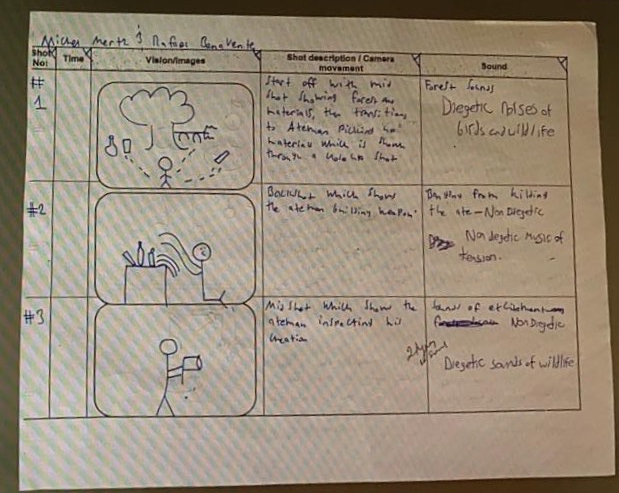
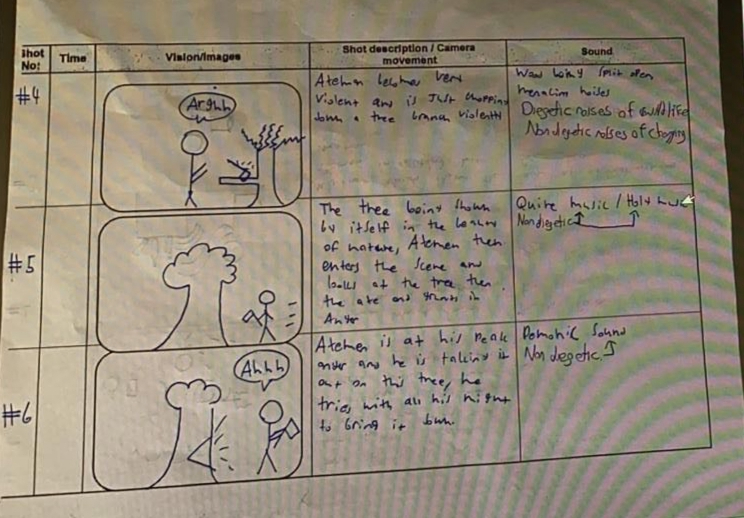
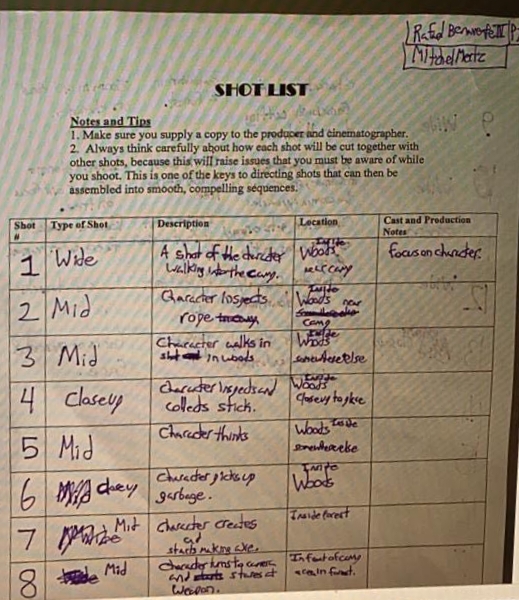
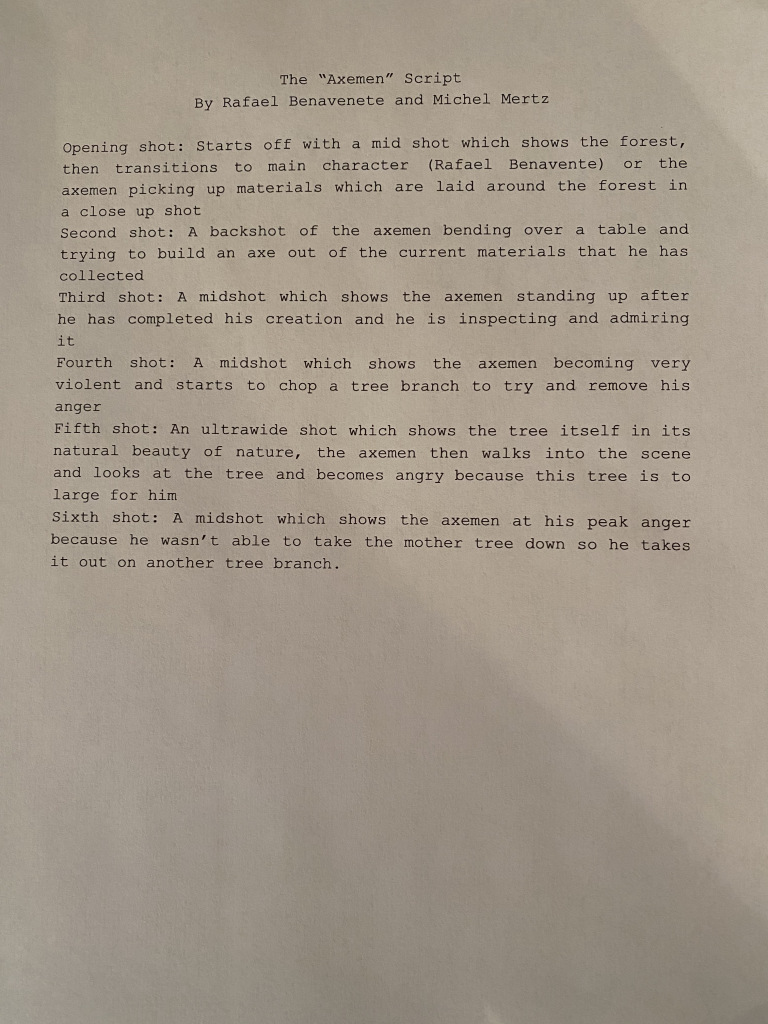
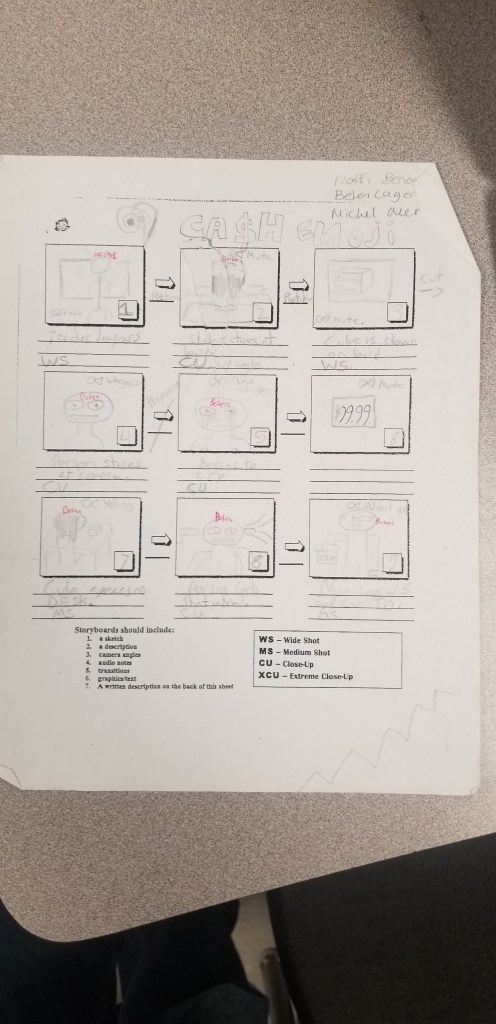
As seen in the images above, an important thing that AS Media Studies have taught me is that a films documentation and planning is key when producing and creating a film. Without these documents shown above, our movie would not have turned out as well as it did. Nor would the process be as simple or as streamlined as it was during production.
The Film making process…
In this set task my role in my group was the camera man, I filmed all the scenes throughout our movie. Me and my group decided to do a film opening task as our set task for AS Media film studies. The good thing about this film is that we already had previous knowledge when we were assigned this task because we had already made a film previously which was called “The Cube”. After deciding on our genre we also had to think of the different codes and conventions that are in a horror film. After looking at some different sources we found that a horror film is usually in a secluded place such as a forest, so this is why we decided to make our movie in the forest. We also chose the forest as our spot because one of the issues I mentioned for our last film is that filming our movie in school wasn’t good because its a very loud place and we knew the forest would be a much quite place. I immediately thought that my partner should be the main actor in this film because he is very passionate regarding film making and he had the type of energy for this type of film. We then did one more step of developing the shot list for our film because as mentioned earlier this is another important task which has to be done when you are first planning your film. After this we basically had everything done for our movie except filming the movie and the after editing. Overall filming went much better due to the choosing of a better location then our last film so we had no distractions so we were able to finish it up much faster then our previous film and the location also makes the movie much more suspenseful and streamlines it much better then the location that we choose for our previous film.
Preliminary Task #2 questions
Rate on a scale of 1-10 how did your group work as a team. Support your rating. What could have made it a 10?
Explain how you organized and prepared for the project. What went well and what could have been improved?
What difficulties did you encounter when FILMING? How did you overcome them?
What difficulties did you face when EDITING?
Discuss how you prepared for the AUDIO of your film?
If you were to REPEAT THE PROJECT AGAIN, what would you do differently?
ANALYZING THE FINAL PRODUCTION, what aspects are you happy with? What could have been improved?
The Film
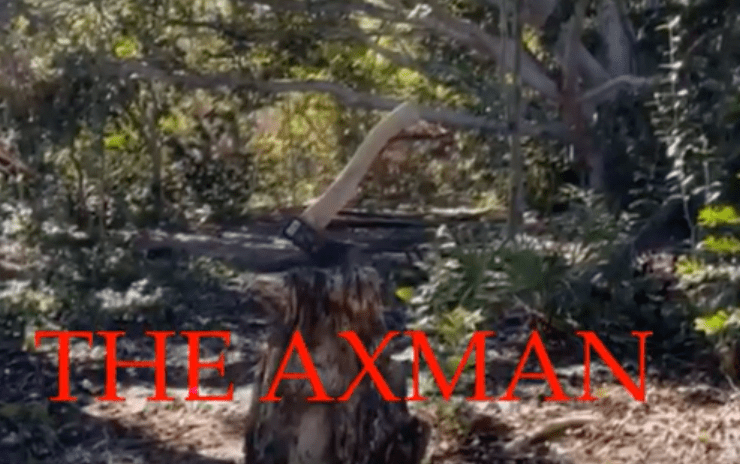
In this final rendition of my film “The Axeman”, I played the active role as the main character, “The Axeman”. I additionally edited the film with my coeditor Michel Mertz, my group member and cinematographer.
Never would I have thought that making a film, especially on this scale, would be so difficult and time consuming. Not only did creative direction need to be perfected, but editing, rerecording, and mastering the video took time and attention to complete the production process. Additionally, the creation of the film revealed the importance of proper acting and time management involved within the recording process. Cohesion between spliced scenes is extremely important, and both sound and visual appearance played a significant role in developing the seamless transition between scenes. All in all, the creation of this film promoted a large amount of hands on learning which has been analyzed and taken into consideration for future consideration.
The film is footage of a government test analyzing and studying an object (the bouncin cube) and its anomalous properties. The beginning of the film starts with the summoning process involving a class room, a teacher and a student. After detecting the anomalous object’s presence, the security drone footage activated and testing began. After the teacher disappears into thin air, the subject is then possessed by the object and is psychologically manipulated. Loud noises including children laughing, chanting, whispering, and some form of dying animal shouting can be heard across the duration of the film, indicating the abnormal sound capabilities of the anomalous object. Footage shows the class board alternating between several images including an image of the bouncin cube and the numbers 99.99. The cube then summons itself in front of the test subject. As no more data could be drawn, a government agent is sent in to eliminate the test subject, concluding the test and stopping the anomalous nature of the object. Once footage is finished, a level 4 memetic kill agent is administered to prevent the spread of this footage to personnel below a level 4 government clearance. After that, a second execution agent is shown to execute the viewers of the footage below a level 3 clearance.
During the creation of this film, a lot of things were learned through several obstacles we faced as a group. For starters we learned that there were many different camera angles that had to be incorporated into the film. Through the implementation of these camera angles different dynamic ideas were transmitted to the audience.
Another challenge that we faced was remembering a script and review it again for a film. We also learned the different types of lighting that can be used in a scene. Scenes where light was distorted and dis-colorized provoked confusion and fear in the minds of the viewers. As a group we also learned the importance of keeping your audience engaged within the film and to do this your movie needs to have specific content that will give the audience what they are looking for. What’s also important in a film is the after editing to put all the final touches. Our film “The Cube” required a lot of after editing to transform the film from basic raw footage into a clean movie experience which matched the theme of our film . We had to add the delusional scenes with the test subject and we had to add the other delusional clip. Another challenge we faced when creating the film was the limitations in sound proofing and set availability which hindered the overall vibe of the film. By restricting the view of the initial scene, we managed to finesse the inconsistent Mise en Scene to streamline the film as much as possible. However, one thing we would need to consider in our next film would be a more available setting with less limitations in terms of sound bleed and environmental disturbances. All in all, the creation of this film was a vibrant learning experience which taught us a lot of valuable challenges that we now know how to overcome. Though not necessarily the most precise film, a lot was learned through this films creation that will prove invaluable when creating our next film.
Hi, my name is Rafael, and I’m a proud student of Mast Academy. Being enrolled in AS Media Studies, I will be learning how to create and analyze the multi-layered factors involved with the study and creation of media in its many forms. Within this blog, I’ll be detailing the certain aspects of media and film that I learn in class. Hopefully, I’ll be able to pick up filming and analysis techniques that will improve my ability to create and understand media, and to critique and evaluate the quality of a film. Maybe I might become as good as Quentin Tarantino!
My set task is to create a two minute film opening that:
>Follows the institutionalized conventions of commercial cinema. >Produce an original work with sound, music, and visual cues. >Work as a group to develop a complex project with the involvement of all members.
With the completion of this project, I will be able to reflect off of what I have done to create said media. Using said reflection and following the list of compulsory questions to reach an improved understanding of how to create a film.
Critical Reflection Question
How does your product use or challenge conventions and how does it represent social groups or issues?
How does your product engage with audiences and how would it be distributed as a real media text?
How did your production skills develop throughout this project?
How did you integrate technologies- software, hardware, and online- in this project?







 Rafael Benavente's Blog