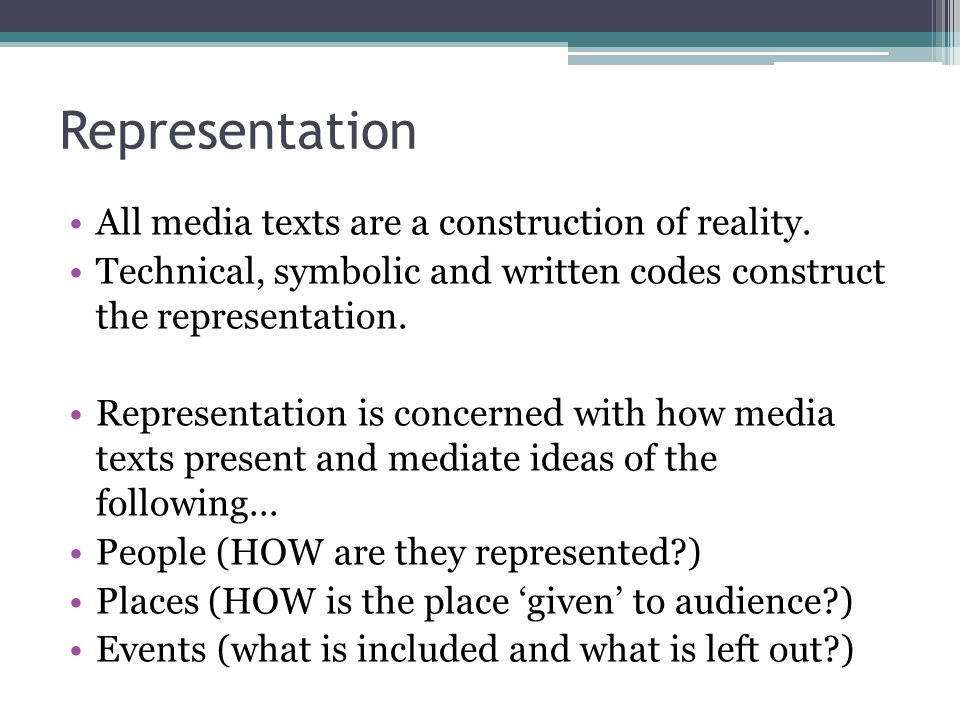
The other day in my AS Media Studies class we discussed the different ways of representation in media. The main representations we discussed were Gender, Age, Race, and Disability. I know that there is many more representation is media but out of all the choices you have these are considered some of the most important ones. In this post I will give a description of each of these four things we discussed.
Age
After gender age is considered the most stereotypical in the media industry, there is many biased judgments when it comes to the different age groups that exist. Age like race is something that can’t be changed but many people will try anything possible in order for people not to know their true age so they won’t get stereotyped. People will dye their hair, get plastic surgery, dress differently and do many other things to hide their age.
Young people are usually shown as:
- Immature,
- stupid,
- greedy,
- lazy,
- selfish,
- unfit,
- obese,
- violent,
- callous,
- gullible,
- unreliable,
- careless,
- self-entitled,
- never going to achieve anything
Old people are usually shown as:
- Grumpy,
- out-dated,
- slow,
- weak,
- whining,
- unable to use technology,
- unhealthy,
- miserly,
- hard-of-hearing,
- ugly,
- never go anywhere
Gender
Gender is considered to be one of the basic things when sorting out human beings and is considered one of the key discussions when it comes discussing representation in media. Now in media they can be stereotypical and usually show men as a masculine and strong figure and women are usually shown as being feminine and delicate.
Things that can usually found in men/masculine figure
- Tough
- Hard
- Sweaty
Male characters are usually shown as isolated and needing help and relying on others for that. Men are finding it more difficult to live up to their media representations then women because of the different things they are expected to do such as being masculine. Teenage anorexia has increased over the past years and so has school shootings because of the body expectations people are supposed to have. Awareness has been growing over the years of these unrealistic targets.
Things that can usually be found in a women/feminine figure
- Fragile
- Soft
- Fragrant
Women in media are usually shown as being part of the context and being a key role of the team such as thinking and helping them with different issues. The representations of women are usually very stereotypical, in societal expectations and as well characters that aren’t molded into these general stereotypes are usually seen as a dangerous and deviant character to the audience. Discussion of women in media usually revolve basically around physical beauty and there is a lacking of powerful female role models in the media industry.
Disability
In media you usually have three stereotypical representations of people with disabilities:
- The villain
- The victim
- The hero
People with disabilities are usually seen as objects of pity and are shown as having the same characteristics and tendencies no matter what disability they may have. Another thing is that in media the full range of disabilities isn’t shown to the audience.
The most stereotypical thing for people with disabilities to be categorized in is the victim category. They are usually shown as an object of sympathy and not having the power to do anything. There is also situations in which it shows them as being victims for a comedy purpose, to make the audience laugh at them.
The next category is them being shown as being hero’s. They are usually shown as able to overcome their disability and then being able to help someone in need. Usually in video games there is lots of stereotyping, people are usually shown as having supernatural powers which they can use towards their advantage to help people. In media as well people who have disabilities in films are always played by actors who don’t have any real disabilities. It is also usually portrayed that they need to overcome their problem to become “normal”
The final category in which they are stereotyped is villains. In films villains are usually shown as having no hands, eyes, their face is messed up and so many other things. Mental illness is also something which is portrayed in villains. A perfect example is the joker in the film “Joker”, which the main character is shown as being a sociopath who gets into dark crimes. An example of disabled people who are shown as villains are all the pirates in “Pirates Of The Caribbean”.
Race
Representation in media of race consist of the same stereotypes that are used for gender. Stereotyping of race in media is seen as more harmful then stereotyping gender. Racial stereotypes are usually based on myths that have been passed down the ages. The need for a more accurate depictions of the different races in media has been a hot topic in the political agenda, but this will most likely take a long time to achieve this.
Sources:
http://www.mediaknowall.com/as_alevel/alevkeyconcepts/alevelkeycon.php?pageID=narrative
http://mediasmarts.ca/diversity-media/persons-disabilities/common-portrayals-persons-disabilities
 Rafael Benavente's Blog