
- Obscuring through lighting: Unlike the other techniques, spotlighting, underexposing, hard light, and shooting through objects and elements don’t distort or hide subjects in your image, they obscure or conceal them
- Distorting through lighting: Now, uplighting, silhouette, and prominent shadows take it a step further and produce a complete distortion of the real world.
- Prominent and projected shadows: – the use of projected shadow creeping along a surface creates tension and fear. While you do not see the figure directly, the distorted figure creates a sense of fear in the audience
- Shooting through objects (internal frames): quite literally, to have a small object between the front of the lens and your subject. This is often used to frame the subject, in order to draw attention to it/them, soften the edges of the image, or add a cool color special effect, to an otherwise ordinary image.
- Shooting through elements: These shots are done to not have the full focus of the shot on a character but instead to include objects as well so there are other things to think about
- Underexposure: If too little light is recorded when capturing an image the image is said to be ‘underexposed‘; The imaging medium i.e. film, or sensor has not been exposed to light for long enough to capture a sufficiently bright image.
- Harsh light (hard light, chiaroscuro): very bright, directional light, typically found during mid-day. It casts strong shadows with very defined lines onto your subjects.
- Uplighting: a popular lighting effect created by strategically placing lighting fixtures on the floor and pointing them up
- Silhouette: effect is created when a light source is placed behind your subject, with little to no light in front of your subject
- Spotlighting: a method of hunting nocturnal animals using off-road vehicles and high-powered lights, spotlights, lamps or flashlights, that makes special use of the eyeshine revealed by many animal species.
Examples of Lighting in Movies

The movie “Us” exemplifies underexposure during the hall of mirrors scene.
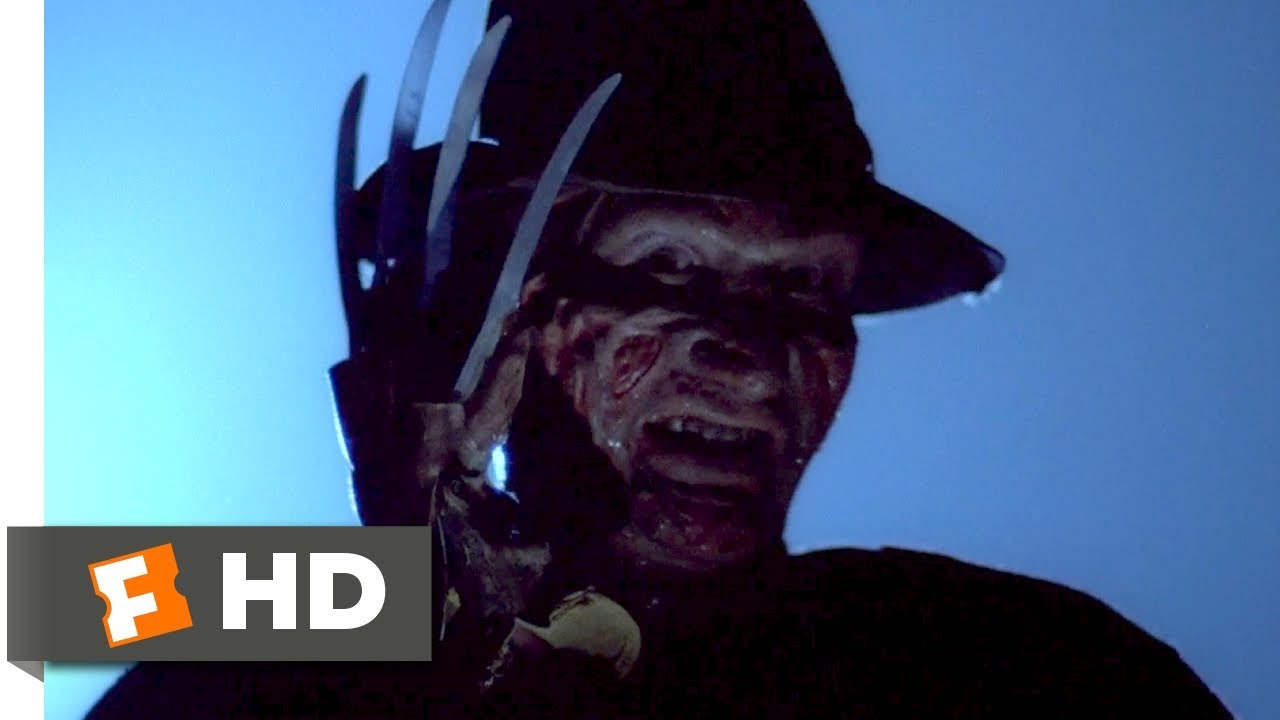
On “Nightmare on Elm street” we see Freddy being illuminated from the side

In Alfred Hitchcocks “Psycho” the film distorts the lighting through the use of a silhouette.
 Rafael Benavente's Blog